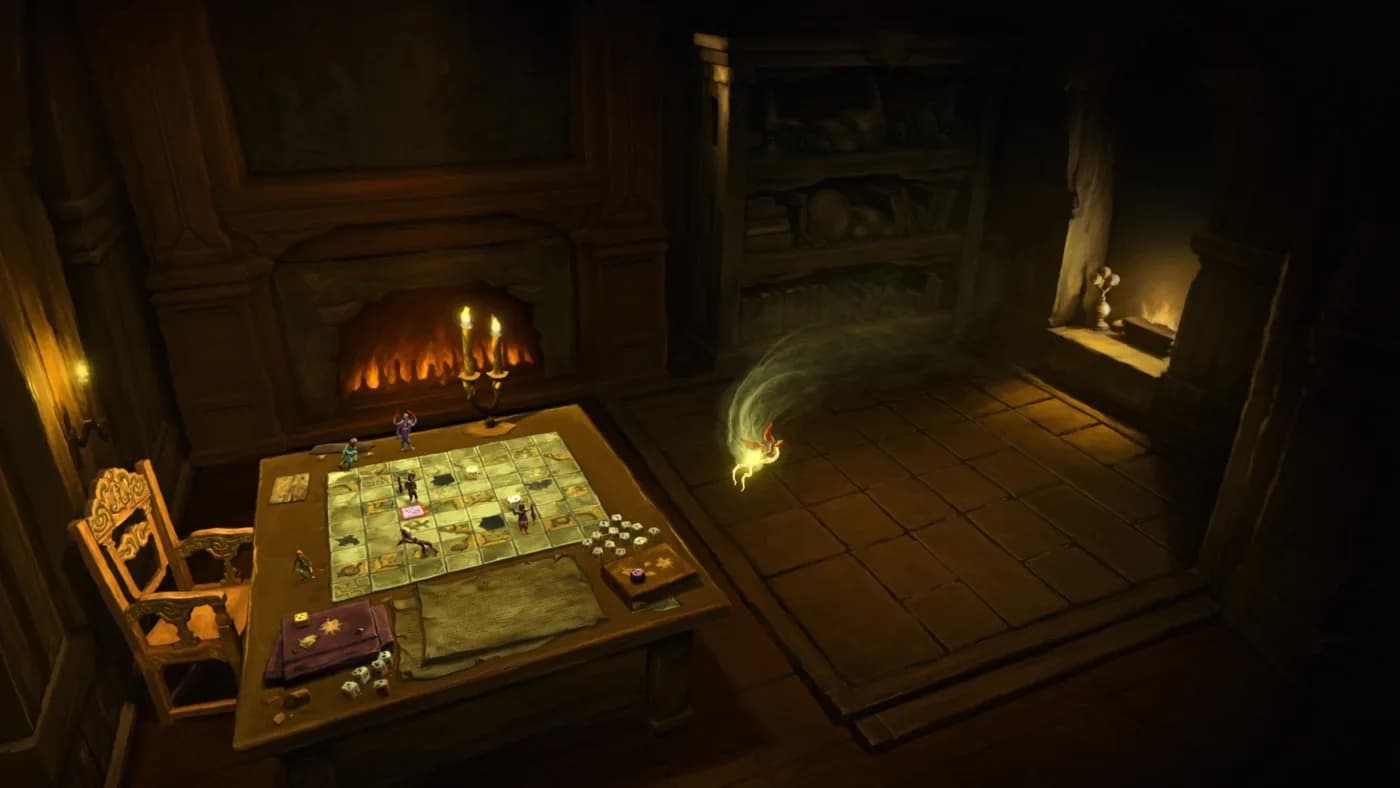
Table Room
Open v1The second tabletop roleplaying room: how a party shares turns, spotlight, and hard choices.
A party is not four people taking turns being the main character. It is four people making each other look good. This room teaches the habits that make a table worth sitting at.
The second tabletop roleplaying room: how a party shares turns, spotlight, and hard choices.
A turn is judged by what it gives the rest of the table, not by how clever it looks alone.
No uploads or local scores. Only the learner's short evidence and reflection proof can enter the signed family portfolio.
This is enrichment only, not accredited school credit.
Focused lesson · Stage 1 of 4
Meet the mission, learn the key words, and see one clear model before doing anything difficult.
Learn how a party shares turns, spotlight, and limited resources.
Roll a round of initiative, sort the totals, and predict who leads the party.
Explain how initiative order is decided and how your turn helped somebody else.
The model shows one round: four heroes, four totals, one order — and the small choices on each turn that decide how the next one goes.
Pick a thinking tier — it's locked in right away, and you can always change it before you begin.
Apprentice quest: Explain why a big bonus still loses to a lucky die.
Contract rank 02 / 04 Proof Turn order claim
A d20 roll plus a bonus that decides the order of turns.
Highest total takes the first turn.
Your moment to act while the rest of the table listens.
Usually one action plus moving where you need to be.
The one meaningful thing you do on your turn.
Help a friend, search a room, cast a spell, hold a door.
The limited fuel a spellcaster spends to cast bigger magic.
Three slots means three big spells before a rest.
Giving a friend advantage by making their task easier.
You steady the ladder; they roll two dice and keep the higher.
Whose story the table is following right now.
Great players pass it around on purpose.
The Turn Order Lab is an honest sorting model — the same d20 plus bonus every table uses — so the order is never a mystery and never a favour.
Everyone rolls a d20, adds their bonus, and the table lines up highest to lowest.
Before your turn arrives, notice what the party actually needs.
Say what you do in plain words, then handle the numbers.
Finish your turn cleanly so the next person can start theirs.
Spell slots, positions, and promises carry into the next round.

Lyra Vale, Head Guide
Complete the three checks, then enter the simulator with a clear claim to test.
Try these first, or jump straight in.
This is temporary practice only. No saved progress. No local scores. No child record data is created here.
Each hero rolled a d20 for initiative. Pick who takes the first turn.
Initiative is just a fair line: roll a d20, add your bonus, and the table takes turns from highest to lowest.
Add each hero's d20 roll to their bonus, then pick whoever ends up highest.
Evidence sentence: name who goes first, show the total you added, then say what your turn gives the rest of the party.
Seal one correct Turn Order call first — sort the round yourself, then the Check quest unlocks.
Pass the Check quest first to unlock the Boss quest.
Pass the Boss quest first to unlock the Scholar quest.
A family-facing summary of the visible lesson artifact. Nothing saves automatically; an approved summary can enter a child record only through a signed guardian session.
Initiative order, turns, actions, spell slots, and table teamwork
Turn order seal
The learner practiced adding a die to a bonus, sorting a party into a fair turn order, and naming one action that made a teammate's turn better.
Ask your learner who went first in their party and what they did to set somebody else up to succeed.
Open the lab, make one choice, and look for the artifact panel.
Source: visible artifact panel / no saved chat / no automatic child record.
Ask the Study Helper to turn this artifact evidence into one parent-child discussion question.
Did my turn make the whole party stronger?
One round of initiative with four seats and four totals.
Record each roll, each bonus, and the order they produced.
Initiative order is just totals, sorted highest to lowest.
Name one thing you did that helped another player succeed.
The learner should describe the party's plan before defending their own turn.
Finish this room · private proof forge
Two short explanations finish the lesson. A guardian can review the exact proof later; saving here never publishes it.
This tabletop roleplaying room is not accredited and does not award official credit. No upload, local score, public post, or transcript claim is created here. Only the learner's short evidence and reflection proof can enter the signed family record after guardian review.
Includes material from the System Reference Document 5.2 by Wizards of the Coast LLC, available under the Creative Commons Attribution 4.0 International License.
Jump to another subject whenever you're ready — this list always matches the live room catalog.
Browse all 44 roomsSee every subject wing in one scrollable catalog.