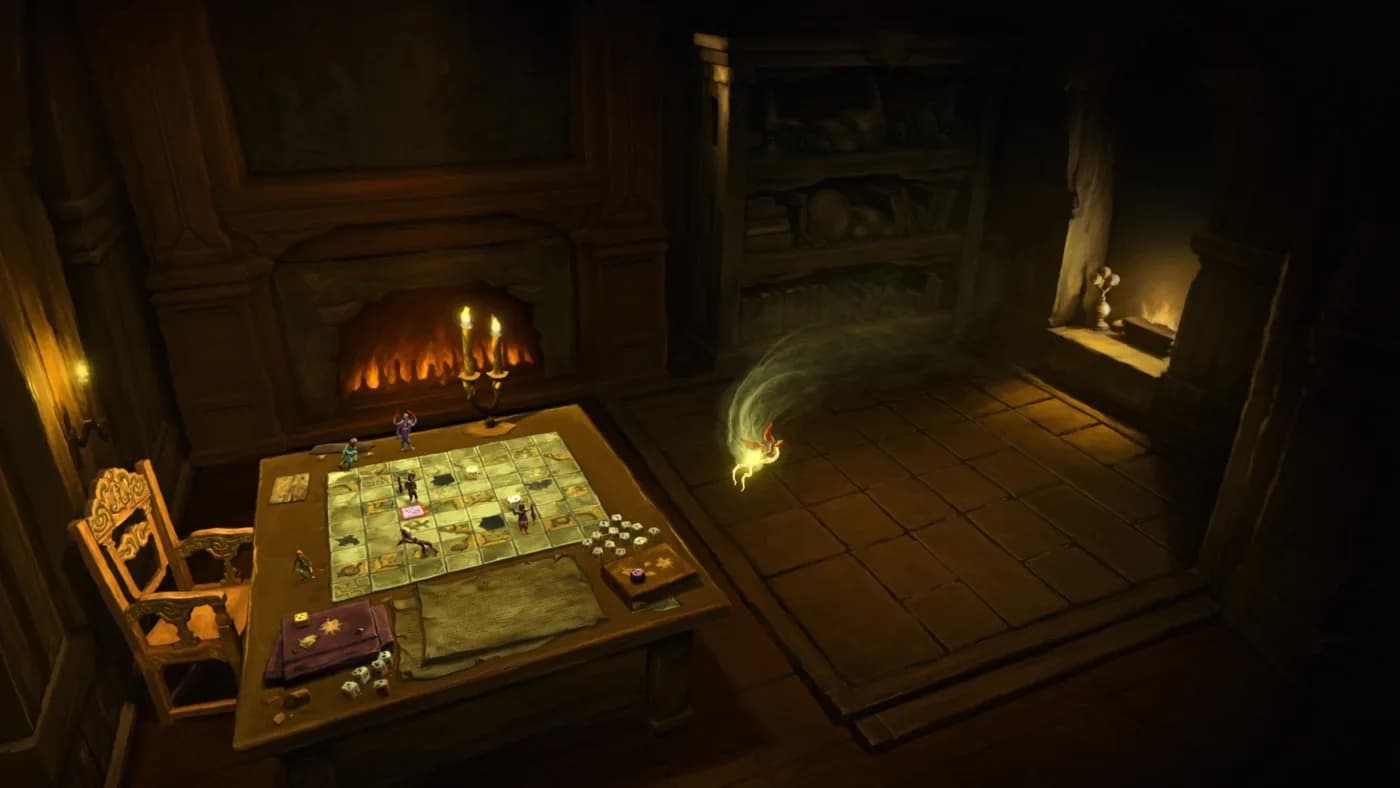
Leadership Room
Open v1The third tabletop roleplaying room: preparing, running, and being fair to a table of friends.
Being the Game Master is the biggest job at the table: you prepare the world, describe it out loud, and make rulings your friends can trust. It is storytelling and leadership in the same seat.
The third tabletop roleplaying room: preparing, running, and being fair to a table of friends.
A ruling the learner can explain out loud beats a clever one nobody understands.
No uploads or local scores. Only the learner's short evidence and reflection proof can enter the signed family portfolio.
This is enrichment only, not accredited school credit.
Focused lesson · Stage 1 of 4
Meet the mission, learn the key words, and see one clear model before doing anything difficult.
Learn to prepare a session and make rulings a whole table can trust.
Read a scene, decide whether it needs a roll at all, and set a Difficulty Class you can defend.
Explain one ruling: the number you chose, the reason behind it, and what happens on a miss.
The model shows a Game Master's real toolkit: a place, a problem, the people involved, and one honest question about how hard the moment should be.
Pick a thinking tier — it's locked in right away, and you can always change it before you begin.
Apprentice quest: Set a Difficulty Class and say the reason out loud.
Contract rank 02 / 04 Proof Fair ruling claim
The Game Master's decision about how an unclear moment works.
"Yes, but it costs you the lantern."
The number a task asks the players to reach.
Tricky is 10, hard is 15, heroic is 20.
The short list of places, people, and problems you get ready beforehand.
Three names, two places, one question the party must answer.
A single situation with something at stake.
A locked archive, a nervous witness, a rising tide.
Deciding when to slow down and when to jump ahead.
Skip the quiet road; linger on the hard conversation.
The conversation where the table agrees what kind of story it wants.
Tone, limits, and how everyone gets time in the spotlight.
The Fair Ruling Lab is a judgement instrument, not a rulebook — every scene has one defensible call, and the lab makes the learner say the reason before it agrees with them.
Write down what is happening, not what the players are supposed to do about it.
Give the table something to picture, then ask what they do.
No roll when failure is boring. No roll when success is impossible.
Say the number and the reason in the same breath.
A miss redirects the adventure; it never ends the fun.

Lyra Vale, Head Guide
Complete the three checks, then enter the simulator with a clear claim to test.
Try these first, or jump straight in.
This is temporary practice only. No saved progress. No local scores. No child record data is created here.
A player says: "I walk across the room and open the unlocked door."
Read the moment, decide whether the dice belong in it at all, then choose a Difficulty Class you can defend.
Evidence sentence: state the ruling, the reason, and what happens on a miss — all three, before the table rolls.
Seal one defensible ruling first — judge a scene yourself, then the Check quest unlocks.
Pass the Check quest first to unlock the Boss quest.
Pass the Boss quest first to unlock the Scholar quest.
A family-facing summary of the visible lesson artifact. Nothing saves automatically; an approved summary can enter a child record only through a signed guardian session.
Running a story, fair rulings, Difficulty Class, session preparation, and table leadership
Fair ruling seal
The learner practiced judging whether a moment needed dice at all, choosing a Difficulty Class they could explain, and planning what a miss costs so the story keeps moving.
Ask your learner about a ruling they made and how they would explain it to a friend who disagreed.
Open the lab, make one choice, and look for the artifact panel.
Source: visible artifact panel / no saved chat / no automatic child record.
Ask the Study Helper to turn this artifact evidence into one parent-child discussion question.
Was my ruling fair to everybody at the table?
One scene, one decision: roll or no roll, and at what Difficulty Class.
Record the Difficulty Class chosen and how likely it made success.
A good ruling has a reason the whole table can hear.
Say what happens on a failure so the story keeps moving.
The learner should defend the ruling without changing it to win an argument.
Finish this room · private proof forge
Two short explanations finish the lesson. A guardian can review the exact proof later; saving here never publishes it.
This tabletop roleplaying room is not accredited and does not award official credit. No upload, local score, public post, or transcript claim is created here. Only the learner's short evidence and reflection proof can enter the signed family record after guardian review.
Includes material from the System Reference Document 5.2 by Wizards of the Coast LLC, available under the Creative Commons Attribution 4.0 International License.
Jump to another subject whenever you're ready — this list always matches the live room catalog.
Browse all 44 roomsSee every subject wing in one scrollable catalog.