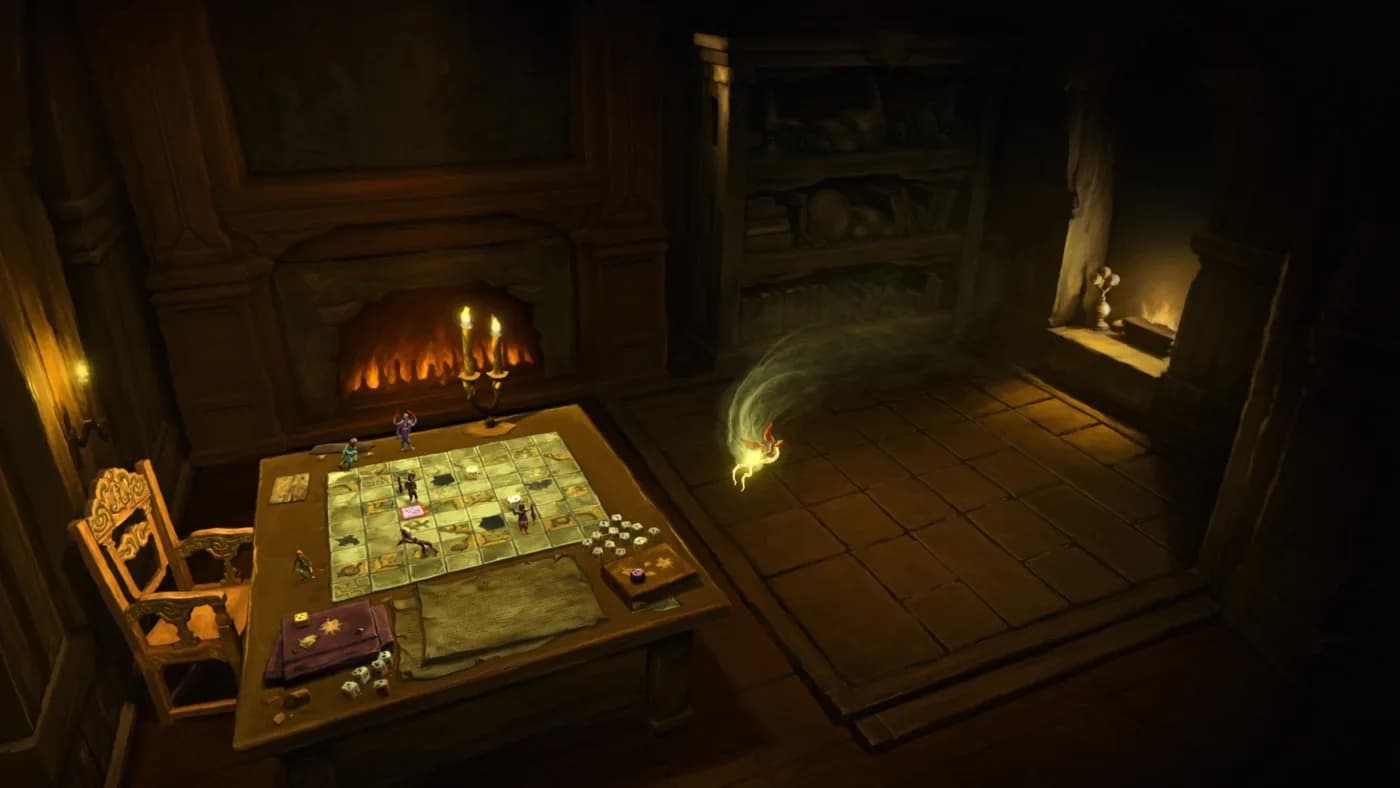
Starter Room
Open v1The first tabletop roleplaying room: how a shared story works, and how the dice make it fair.
Tabletop roleplaying is imagination with rules everybody can see. The Game Master describes a world, you decide what your hero tries, and a twenty-sided die settles what nobody knows yet.
The first tabletop roleplaying room: how a shared story works, and how the dice make it fair.
Describing what your hero tries comes first. The numbers only settle what nobody at the table knows yet.
No uploads or local scores. Only the learner's short evidence and reflection proof can enter the signed family portfolio.
This is enrichment only, not accredited school credit.
Focused lesson · Stage 1 of 4
Meet the mission, learn the key words, and see one clear model before doing anything difficult.
Learn the shared-story loop before learning any rule.
Set a Difficulty Class, roll the d20, and watch what advantage does to your chances.
Explain one d20 test in your own words: what you tried, what you added, and what the total meant.
The model shows the whole loop in miniature: a described moment, a decision, a d20, and a Difficulty Class that tells everyone what success needed.
Pick a thinking tier — it's locked in right away, and you can always change it before you begin.
Apprentice quest: Name the ability score the attempt uses, and why.
Contract rank 02 / 04 Proof First quest claim
The person who describes the world and plays everyone in it who is not a player.
"The bridge creaks. What do you do?"
A twenty-sided die that decides uncertain moments.
Roll it, add your modifier, compare the total.
One of six numbers describing what your hero is naturally good at.
Strength, Dexterity, Constitution, Intelligence, Wisdom, Charisma.
The small bonus or penalty an ability score gives your roll.
A score of 16 adds +3 to the die.
The number your total has to reach to succeed.
A wobbly rope bridge might be Difficulty Class 10.
Roll two dice and keep the higher one, because something is helping you.
A friend holds the rope steady while you climb.
The Dice Oracle is an honest odds model, not a luck charm — a twenty-sided die has twenty equally likely faces, and the lab shows exactly how often each plan works before you ever try it.
You hear the place, the problem, and what your hero can notice.
Say what your hero actually tries. Plain words beat rules language.
If the outcome is genuinely uncertain, roll a d20 and add your modifier.
Meet it or beat it and it works. Miss it and the story turns somewhere new.
Success and failure both move the adventure. Nobody sits out.
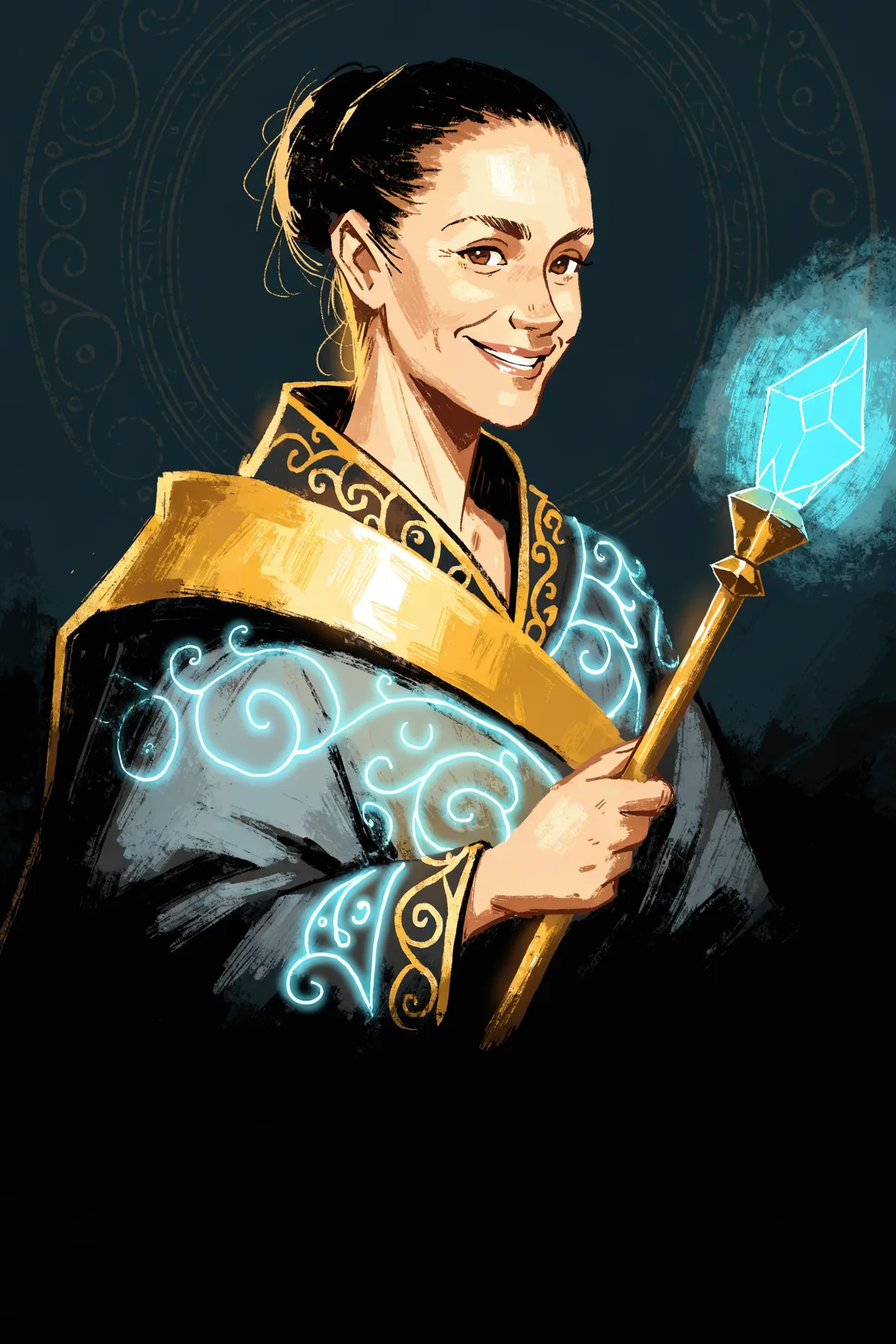
Lyra Vale, Head Guide
Complete the three checks, then enter the simulator with a clear claim to test.
Try these first, or jump straight in.
This is temporary practice only. No saved progress. No local scores. No child record data is created here.
Build a test your hero would actually take: get the success chance to 50% or better.
You succeed when your d20 lands on the Difficulty Class or higher. DC 10 is tricky, DC 15 is hard, DC 20 is almost heroic.
These are exact odds for DC 15, not a guess: one die passes on 6 of its 20 faces.
“2d6+3” means roll two six-sided dice, add them, then add 3. The lowest possible total is 5 and the highest is 15.
DC 15 with one die only succeeds 30% of the time. Lower the Difficulty Class or roll with advantage.
Evidence sentence: say the Difficulty Class, the chance, and why advantage helped, before you say what your hero does.
Seal one honest Dice Oracle trial first — build a test with a fair chance, then the Check quest unlocks.
Pass the Check quest first to unlock the Boss quest.
Pass the Boss quest first to unlock the Scholar quest.
A family-facing summary of the visible lesson artifact. Nothing saves automatically; an approved summary can enter a child record only through a signed guardian session.
The shared-story loop, d20 tests, ability scores, Difficulty Class, and advantage
First quest seal
The learner practiced describing what a hero tries, choosing the ability behind it, and reading the exact odds of meeting a Difficulty Class with one die or with advantage.
Ask your learner to tell you about a moment their hero tried something hard, and what the dice changed about the story.
Open the lab, make one choice, and look for the artifact panel.
Source: visible artifact panel / no saved chat / no automatic child record.
Ask the Study Helper to turn this artifact evidence into one parent-child discussion question.
Did my hero's plan have a real chance of working?
One d20 test: the thing tried, the ability behind it, the Difficulty Class.
Record the die result, the modifier added, and the total.
A d20 test succeeds when the total reaches the Difficulty Class.
Say what changed when a friend's help turned one die into the better of two.
The learner should describe the story moment before naming any number.
Finish this room · private proof forge
Two short explanations finish the lesson. A guardian can review the exact proof later; saving here never publishes it.
This tabletop roleplaying room is not accredited and does not award official credit. No upload, local score, public post, or transcript claim is created here. Only the learner's short evidence and reflection proof can enter the signed family record after guardian review.
Includes material from the System Reference Document 5.2 by Wizards of the Coast LLC, available under the Creative Commons Attribution 4.0 International License.
Jump to another subject whenever you're ready — this list always matches the live room catalog.
Browse all 44 roomsSee every subject wing in one scrollable catalog.